
Your prototype has been running reliably for a few weeks now. The next funding round is planned for the spring, and there's a launch video on the schedule. The deck is done, and you've split communication across the team. You write the LinkedIn posts yourself, squeezed in between meetings. The website was built by a freelancer who moved on to other projects long ago, and the launch press release will be written by whoever has a free moment. It works, more or less, and that's exactly what makes it dangerous.
At a striking number of physical AI and robotics startups, this setup rests on a belief that runs deep in technical teams. “Good technology speaks for itself.” If the robot does what it promises, investors, customers and candidates will see that on their own, and communication can run on the side. I think that belief is one of the most expensive mistakes in the industry, and in this piece I'm going to take it apart.
It starts with ownership. When everyone does a bit of communication, nobody owns it, and everyone tells their own version of the story. The company on the website is slightly different from the one in the deck, and the launch video shows a third. But there's a deeper reason none of them really lands.
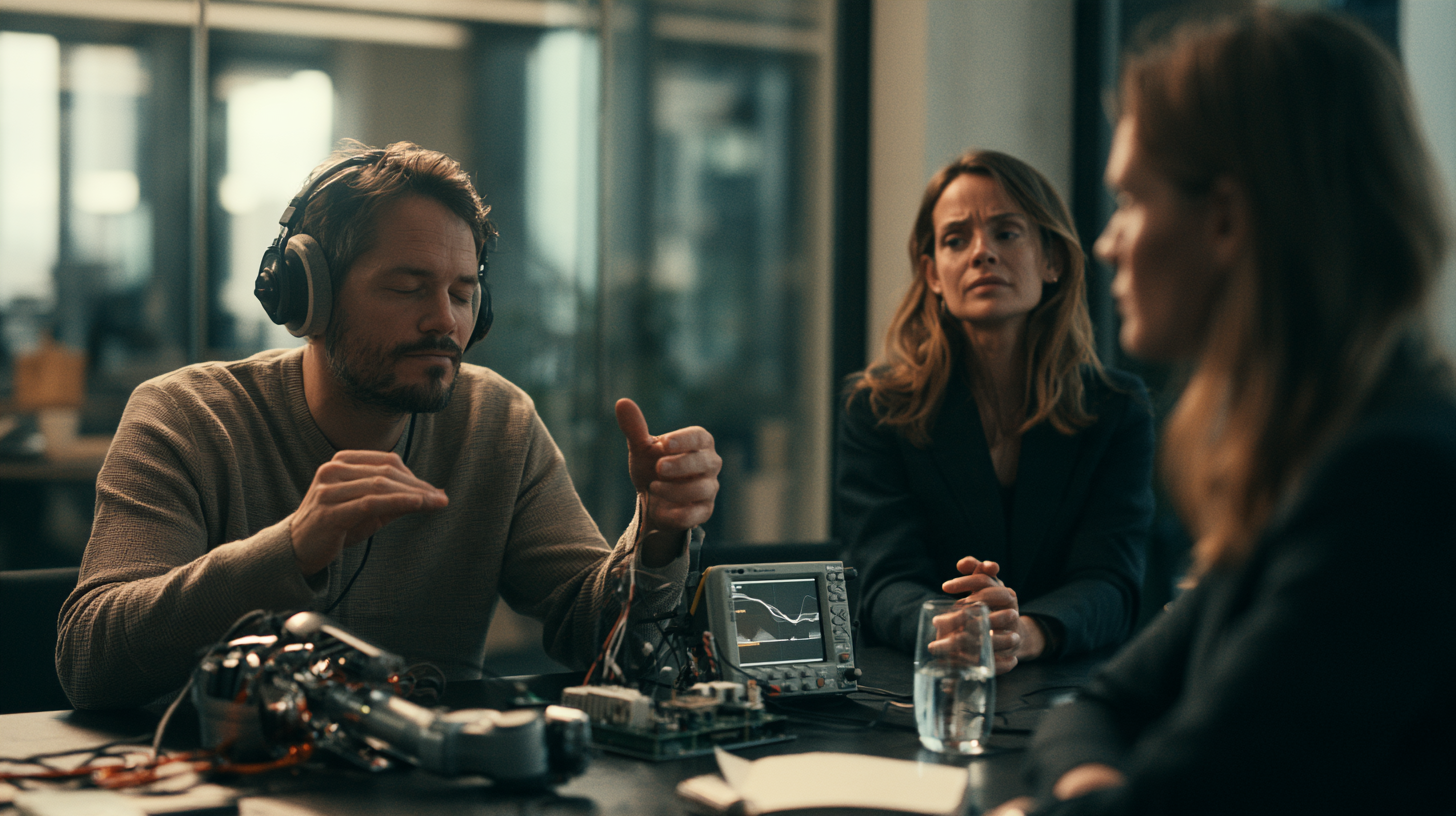
In 1990, a Stanford graduate student named Elizabeth Newton ran a simple experiment. She sat people down at a table in pairs. One person was given a well-known song like “Happy Birthday” and asked to tap out only its rhythm on the tabletop with one finger. The other had to guess the song. Beforehand, Newton asked the tappers how many songs they expected the listeners to recognize, and they guessed about half. The listeners identified just three out of 120.
The reason is simple. When you tap, you hear the melody in your head, and you can't switch it off. None of that reaches the other person, who only hears a finger drumming on a table. Psychologists call this the curse of knowledge, and it describes pretty precisely what happens when engineers explain their technology. In this experiment, engineers are the ones tapping. They hear the years of development, the approaches they threw out and the elegance in the details. The customer hears a datasheet.
This is why technical teams love explaining how something works. But customers and investors make their decisions on the why. Why does this technology need to exist, why now, and what changes for me? Agility Robotics just showed what that translation looks like. In mid-September the company unveiled Digit 5, a humanoid designed to work right next to people without a safety fence. There's a lot of technology behind it, from sensors and AI to a dedicated safety controller. Yet Daniel Diez, who oversees communications at Agility among other things, tells the robot's story through an obstacle every plant manager knows. “It's probably the biggest misconception that what's holding back these robots are skills or AI or batteries,” he said. What really holds back large-scale deployments, he added, is that the robots can't work outside safety fences. A bundle of technology becomes the answer to a problem the customer already has.
Most teams don't manage this, and nobody is to blame. It comes down to the nature of the task. In engineering, one plus one equals two, a solution can be tested, and leaving something out is a mistake. Storytelling asks for almost the opposite. You have to select, cut and sharpen, and whether it worked is decided by the audience, not by any measurement. An engineer thinks in architecture and tolerances, while the buyer thinks in time, money and value. Every hurdle the team cleared took months of hard work, so every single one has to go in. And engineers often write for an imagined audience of colleagues who would flag every simplification as an error, even though those colleagues will never read the text. What comes out is conscientious and complete, and barely anyone outside the lab understands it.
You wouldn't let an amateur near your robot's actuators, and you wouldn't hand them to whoever happens to have a free afternoon. For every critical component, you bring in people who have mastered the craft. So why should it be any different for the story that's supposed to sell and finance that robot? Apptronik in Austin has answered that question for itself. The company builds humanoids for factories and logistics, and in April it brought in a new VP of Marketing, an Emmy-winning digital executive who previously built brands at Paramount+ and Amazon.

The craft is mostly a matter of decisions. Who are you telling the story to, and what do you leave out? For a recruiting film for a research institute that wanted to attract PhD students and postdocs, the obvious route would have been to talk about research topics, awards and publications. Instead, the film deliberately went another way, because young researchers choose a lab for its day-to-day life and the people in it. So that's exactly what the film showed, with a good sense of humor.
The most important of these decisions comes before any money is spent, and that's exactly where the most expensive mistakes happen. In my years as a producer, I was responsible for projects with budgets of over €100,000, and most of the money almost always burns in the same place. Budget gets approved before anyone has settled what the story actually is. That goes for a film just as much as for a website, a trade show booth or an exhibit. Then the shooting, coding and building begins, and the crucial questions only surface once the day rates are already running. Every answer that arrives after that point means rework. You can see the result in your feed every week, launch videos with a robot against a white background, slow motion and electronic music. Most of them are well made, and a week later nobody remembers any of them.
So I flip the order and settle the story before the big budget starts flowing. With AI, that's faster and cheaper today than it has ever been. For an animated film about a software platform for robots, I first built an AI animatic, a rough cut of the entire film with the complete story, all the copy and the visual direction. Because nothing had been fully produced yet, every change took hours instead of the weeks it would have cost on the finished film. Leadership, marketing and engineering aligned on the story using that version, and only then did the film go into expensive animation. The story was negotiated before production instead of in the middle of it. When a lot of people in a company weigh in on a product, this step decides whether you end up with a clear narrative or a compromise between too many voices.
The heaviest cost never shows up on a balance sheet. It's your company's prestige. Good people want to work where the future seems to be happening, and investors want in on the company everyone is talking about. That prestige is a layer of its own, on top of the technology. You could also say it's what makes a company sexy, and communication can create it. Of all people, Palmer Luckey figured out how much this matters. As a teenager he built the Oculus headset, and he later founded the defense tech company Anduril. With his mullet and Hawaiian shirts, he comes across as someone who couldn't care less what anyone thinks of him. Speaking to Fortune in 2024, he said the opposite, and bluntly. “I realized too late that my reputation is actually very important.” If he doesn't care what people think of him, he said, he can't accomplish anything of significance.
Without that layer, you'll feel it in three places. Investors who can't sum up your technology in a few sentences put their money into the competitor whose story they understood. The people you want to hire sign with the company whose mission they can explain to their friends. And every customer conversation starts uphill, because you first have to explain what your company actually does, so your sales cycles run longer than they need to.
In a crowded category where lots of companies promise similar things, the pilot customer and the round often go to the competitor with the weaker technology and the better story. I've written in detail, using Figure as the example, about how far a story can reach into a startup's valuation. Your technology may speak for itself, but it only gets heard once someone tells its story.
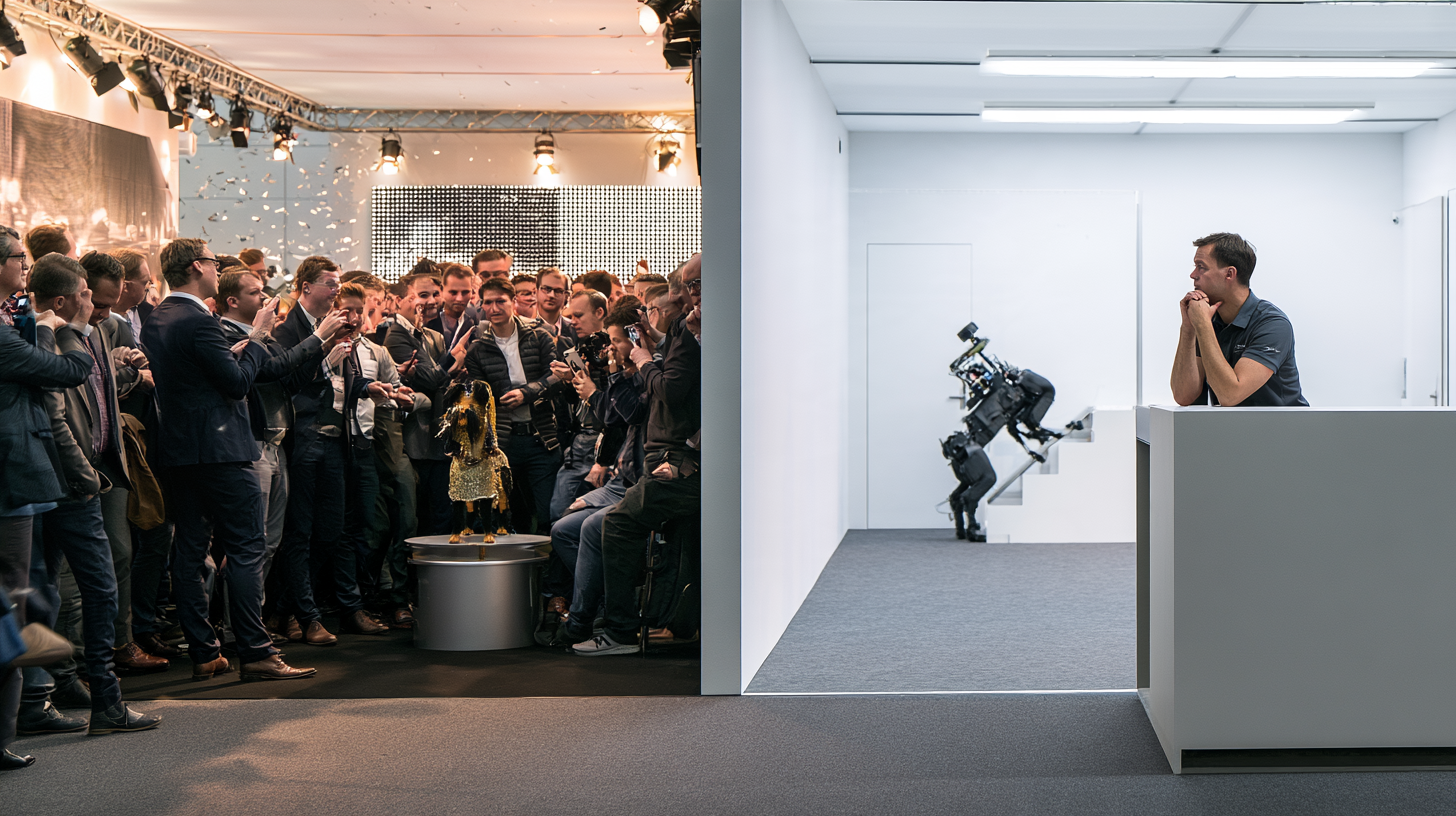
The first answer sounds the most reasonable. We'll handle it ourselves, on the side. Everyone on the team can write and talk, some of them really well, and nobody knows the technology better than the people who built it. That's a serious objection, and at its core it's even right. You have to own your company's story, and nobody can take that off your hands. But owning it doesn't mean doing all of it yourself. The founders who get this right have experts bring them proposals, weigh them up and make the call.
If you do it yourself anyway, you pay with the most valuable thing a young company has, its founder's time. Every hour you spend polishing website copy, slides and posts is an hour missing where only you can move things forward. It's missing from the investor meeting, from the pilot customer and from your team, who are waiting on your decisions. The website stays almost finished for months, the deck gets rebuilt late at night before every meeting, and the launch press release comes out when nobody is paying attention anymore. Meanwhile, some robotics companies are moving very fast right now. While you're still polishing your deck, one of them is already telling its story and taking the position that could have been yours.

These days, anyone doing it themselves almost always turns to AI, and that's the right instinct. Nobody who communicates professionally can get around AI anymore, and I use it constantly myself. The tool just doesn't solve the problem from earlier. AI writes from what you give it, and what you give it is your knowledge, your terminology and your view of the technology. What comes back is fluent text, and when you read it, it sounds clear, because you hear the melody as you read. Your investor still only hears the tapping. So the output is there, faster than ever, but the curse of knowledge is baked into it just as before. On top of that, AI delivers the statistical middle of everything that already exists, and anyone without much communications experience simply takes that middle as it is. A striking number of investors in my feed complain about pitch decks that all sound the same.
The second answer is an agency. Plenty of agencies know marketing in general, but they often lack the technical depth that an innovation in robotics or physical AI needs when it takes a lot of explaining. Then there's the question of sequence. The largest study on briefing to date surveyed more than 1,700 people in over 70 countries, in-house marketing teams as well as agencies. Among the in-house marketers, 80 percent think their briefs are good, while only 10 percent of the agencies receiving those briefs agree. At the same time, 60 percent of the in-house marketers said they only work out their own strategy during the creative process. So the agency is expected to answer a question its client hasn't answered yet. Respondents estimated that this wastes up to a third of the marketing budget.
The third answer is a full-time hire. For most startups it comes too early, and the expectations attached to it are rarely realistic. The job ad usually describes one person who covers strategy, copywriting, PR, social media, the website and trade shows, and ideally also delivers the leads that sales happens to need right now. The business card then says Head of Marketing, even though that person is the entire marketing department. It's a one-man band, harmonica, guitar and a drum strapped to the back. It's impressive, but none of the instruments really sounds good. And because a story needs time to land in the market, someone is often disappointed after six months, and the position gets advertised all over again.

Your technology is made of many parts, and your story is no different. The voice stays with you, because nobody else can credibly say why this company exists. The substance lies with your team, who build the technology every day. The craft you source from specialists, like any other component. What young companies are missing is someone who holds it all together. That person develops the core narrative, meaning what your company is, who it builds for and what changes because of it, and makes sure the website, the deck and the launch video all tell the same story.
That's exactly where I come in with Lucent, as an interim communications lead. Together we develop the core narrative and decide what gets told and what doesn't. From there, we build your communication piece by piece, the way you improve a prototype with every iteration. Along the way, your team learns to do a lot of it themselves, from posts and presentations to briefs for vendors. For film, design or the website, I bring in the right specialists from my network and manage them. When the engagement ends, there's a foundation your team can keep building on, and if something gets stuck, you can always reach me.
Unlike most agencies, I have no financial stake in the production work. That's why I can also tell you when you don't need a film right now, and work with you to find the route that gets the most done for the least money.
If you're heading into a round or a launch and your story is still something you handle on the side, send me a message. I'd love to hear what you're building, and I'll tell you honestly whether I can help.