
You have seen the videos. Chinese humanoid robots dancing in formation, boxing in a ring, doing kung fu on a stage. And underneath every clip sits the same question. How much of that is real, how much of it is on its way here and why did the german chancellor watch a robofight while visiting China?
I could have added another German opinion to that pile. Instead I sought out someone who knows the answer from the inside. Kuan Yang spent twelve years in automotive, AI chips and robotics, most recently as Strategy Director at AgiBot, one of China's leading humanoid makers. Today he advises OEMs, investors and suppliers as an independent in Shanghai, and he is one of the few people in this industry who publish the uncomfortable numbers under their own name. His book on humanoid robots came out in April.
I sought this conversation because Germany, when it comes to Chinese robotics, almost always talks about China and almost never with someone from China. So Kuan and I agreed on one thing before we started. We challenge each other in this piece, because politeness that avoids the real questions would waste his expertise and your time.
I write from the Stuttgart region. If you have never been here, the automobile was invented in this region, Mercedes-Benz and Porsche still build here, Bosch runs its research campus here, and around them sits one of the oldest and densest automation industries in the world, from Festo's pneumatics to Trumpf's machine tools. Robots have been standing in the production halls here for decades. The mood, though, has shifted. A lot of the Mittelstand's current pain is homemade. But what changes the picture is China itself, for decades this region's best customer, now turning into a tough competitor.

What we talk about in this article: Who actually pays for humanoid robots in China today, what founders in Shanghai say about Europe when the cameras are off, and why this race will be decided by something as unspectacular as service, liability and trust.
Marc: Who is actually paying for humanoid robots in China today, and for what job?
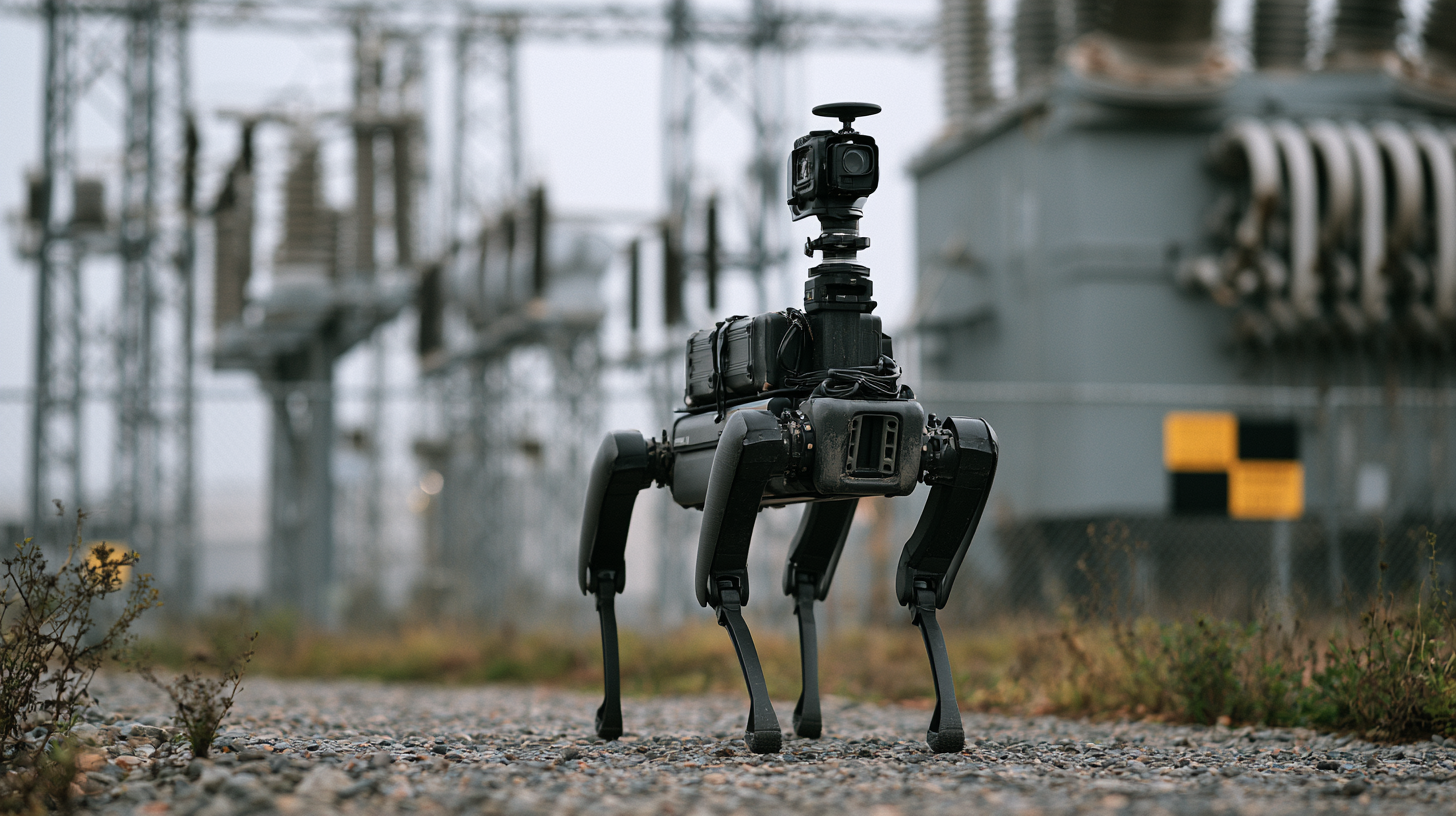
Kuan: We're in the early market phase, and that's worth being honest about because every major technology goes through it. Think of electric vehicles in China around 2014, government pilots, state-owned fleets, early adopters testing the water. That's where humanoids are now. The early buyers are universities and research institutes running R&D programs, state-owned enterprises piloting "future factory" initiatives, and a handful of private manufacturers running small-scale trials. The near-term commercial story is quadrupeds for industrial inspection. Power plants, substations, tunnels. Real customers, real deployments, unit economics that work. That's the revenue engine that funds the humanoid R&D. The commercial humanoid market will come. The question is timing, not direction.
Marc: So there are no real commercial customers for humanoids yet. After WAIC (a large chinese trade show around AI) you wrote that not one company has deployed more than 1,000 humanoids in a single real industrial setting, anywhere. Your own estimate: maybe 15 to 20 percent of China's humanoid companies are real businesses rather than narrative machines. Few people inside the industry would put that in writing.
Kuan: When I put that estimate in writing, several people inside the industry reached out privately and said "you said what we all know but can't say." That's exactly the problem. Everyone knows the real numbers. Almost nobody puts them in writing because they're worried about what investors, partners, or their own board will think. But you can't fix a problem you can't name. And the problem isn't that humanoid robots don't work. It's that we're in year two of a ten-year build, and pretending we're in year eight helps nobody. The 15 to 20 percent? Those are genuinely impressive companies. I'd rather be the person who tells you which 15 percent are real than the person who tells you all 100 percent are wonderful. The second person is more popular at industry dinners. The first person is more useful to someone writing a check or signing an integration agreement.
Marc: If a German Mittelstand CEO had walked next to you at WAIC, what should they pay attention to?
Kuan: The scale of the ecosystem. Over 200 exhibitors in the robotics halls. The depth of the component supply chain, actuator makers, sensor companies, thermal management specialists, each with real products and real customers. In Europe you have to search for these suppliers. At WAIC they're all in one building.
Marc: Let me push back on that one sentence, because nobody here has to search. Within three hours of my desk sit the companies whose motors, actuators and sensors work inside humanoids worldwide, KUKA's robot factories, the Fraunhofer institutes and ETH Zurich with its robotics spinoffs. This region is one of the densest automation clusters in the world. It just never presents itself as one, and perhaps that is the real difference to WAIC.
Kuan: What's worth paying attention to is not any single company's stage show. It's the infrastructure layer. China's robotics industry is moving from "who builds the best robot" to "who builds the best ecosystem around robots." For a German CEO, the takeaway should not be fear. It should be: where can we plug in?
Marc: Let me turn that question around. The premise underneath says China brings the technology and Europe brings the market. But in your own posts, manipulation is nowhere near usable and almost everything is a demo, while the unspectacular robotics that pays for itself, industrial robots, cobots, mobile robots, inspection robots, run here already. So if the fundamental research runs here and the economically working robotics does too, what is the case for Europe taking the plug-in role? What does China bring that Europe could not build itself, and what should a European partner reasonably expect in return?
Kuan: I'm not asking Europe to accept a subordinate role. I'm describing a division of labor that already exists. What China brings is iteration velocity at a cost structure that Europe cannot match, not because European engineers are less capable, but because the Yangtze River Delta compresses an entire supply chain into 300 kilometers. When a Chinese humanoid company needs a custom actuator housing, three suppliers quote within 48 hours. The prototype is on the test bench in a week. Version two arrives in month two. You can build a factory anywhere. You cannot transplant an industrial cluster. What China does not bring, and this is where your cluster is the answer rather than the counterargument, is the precision engineering, the reliability over 10,000 hours, the certification infrastructure, and the application knowledge that comes from decades of running robots in real production environments. That's the missing layer that makes Chinese hardware deployable. You ask what a European partner should reasonably expect in return. Three things. Technical transparency, meaning real access to the engineering team, not a black box. Joint development, with the European partner's application requirements feeding directly into the product roadmap instead of being handed a finished spec and told to adapt. And shared economics, so the integrator who carries the liability and builds the local service layer shares in the upside, not just a margin on distribution.
Marc: How is Europe seen from inside China's robotics industry right now?
Kuan: As the most important market after China, and as a partner, not just a destination. The US door is closing for political reasons. Southeast Asia and the Middle East are growth markets but narrower. Europe has what Chinese robotics companies need: a deep manufacturing base, real labor shortages, demanding industrial customers, and a regulatory framework that, once navigated, provides market stability. What I tell founders: don't treat Europe as an export market. Treat it as a partnership market. Find the integrators, the application engineers, the service companies that already have customer relationships. Build together.
Marc: Washington is moving to ban Chinese humanoids outright. Do you expect Europe to follow?
Kuan: I don't expect Europe to follow the US approach. Europe's tradition is regulation, not prohibition. The new Machinery Regulation sets standards, and companies that meet those standards can compete. That's the right approach. It creates a level playing field based on merit, not nationality. Chinese companies that invest seriously in European compliance and local presence will succeed.
Marc: Regulation is only half of Europe's role, and the smaller half. By the IFR's count, Western Europe is one of the most densely automated industrial region in the world, and Germany ranks third globally at 449 robots per 10,000 employees. The supposed regulator is one of the most experienced robot operators on the planet. And the history goes deeper. For four decades, technology transfer was the price of entry into the Chinese market. The first German carmaker came in through a joint venture in 1984, expertise from our companies flowed into Chinese industry, and China used it remarkably well, moving from copying to parity, and in some fields to leadership. The latest turn of the same mechanism runs in the other direction. Volkswagen is now putting 2.4 billion euros into a joint venture with Horizon Robotics, a company you know well, to buy access to Chinese driving software. So when you and your clients think about Europe, is it the regulator, the customer, or the industrial peer this history describes?
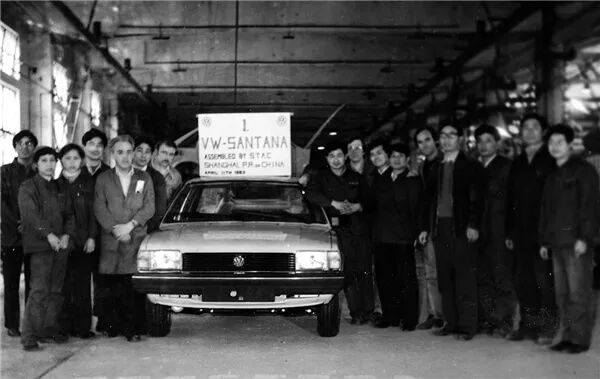
Kuan: When my clients think about Europe, they think all three things you listed. Regulator, because the Machinery Regulation sets the rules of entry, and smart companies want to play by clear rules. Customer, because Europe's manufacturing base is the most sophisticated buyer of automation in the world. And industrial peer, because the components, the research, and the integration expertise are world-class. On the JV history: it reads differently from Shanghai, but not in the way you might expect. I see it as both sides got exactly what they negotiated for. European carmakers got access to a market that became their largest source of profit for two decades. China got technology transfer and industrialization know-how. Where the lesson for today differs is this: the JV era was defined by asymmetry. One side had the technology, the other had the market. Robotics is different. Both sides have technology. Both sides have markets. That's not a teacher-student relationship. That's two industrial powers figuring out how to build something neither can build alone. The VW-Horizon example you mentioned actually makes my point better than I could. A German industrial giant is paying billions for Chinese AI software. That's two-way technology flow. Robotics will follow the same pattern, but only if both sides show up as peers, not as teacher and student, and not as seller and colony.
Marc: The EU Machinery Regulation puts full manufacturer liability on whoever puts their name on the machine. Who carries that risk in these partnerships?
Kuan: It means the partnership model isn't optional. It's the only way this works. The integrator provides the local entity, the customer relationship, and the regulatory know-how. The Chinese OEM provides the hardware, the technology, and the manufacturing scale. Neither can succeed without the other. This is actually healthy. It forces both sides to invest in the relationship, to build real service infrastructure together, to share risk and reward properly.
Marc: From a system view I understand why you call the incentive healthy. But look at it from the other end of the bridge. The European integrator carries full manufacturer liability, for a technology he does not control. The quiet concern in many German machine shops is that this arrangement could turn out to be distribution with the risk attached. From their desk, the model is only healthy if the technology access a partner receives outweighs the liability he signs for.
Kuan: That's exactly right, and it's the sentence that should frame every negotiation between a Chinese OEM and a European integrator. The only answer is depth. The integrator who gets a black box and a warranty card is taking on liability without control. This is why I've been telling Chinese OEMs that "we have an office in Munich", one person, no spare parts, no engineering capability, is not local presence. The pioneering partnerships will be the ones where the integrator has a named engineer on the OEM's Slack channel, not just a contract and a prayer.
Marc: In China, a dancing robot draws a crowd. In Germany, it reads as a toy. Do Chinese manufacturers see that difference?
Kuan: Increasingly, yes. In China, showing a robot in motion, dancing, running, doing something visually impressive, is a legitimate way to signal technical capability. It works in the domestic market because Chinese industrial buyers understand that behind the spectacle is real engineering. What works in China can read as entertainment in Germany. The smart Chinese companies understand this and are adapting. They're developing case studies, publishing technical documentation, showing real deployment data.
Marc: One half-sentence I want to sharpen, in your favor. The European buyer is not skeptical because he lacks the context to read a robot video. He is skeptical because he has decades of experience running robots in his own halls and knows what sits between a demo and around-the-clock operation. Proof is not a cultural preference here, it is purchasing logic.
Kuan: You sharpened this exactly right, and I'm adopting that framing. The implication is actually stronger than what I originally wrote. European buyers have more context than anyone, from running robots in their own factories for decades. That doesn't make them harder to sell to. It makes them better customers for the companies that earn their trust. A deployment reference from a German factory carries more weight globally than ten reference letters from pilot projects.
Marc: Last question. Three years from now, what will separate the Chinese robotics companies that made it in Europe from the ones that didn't?
Kuan: Investment before revenue. The companies that will make it are investing in the local layer now, when the commercial volumes are tiny. They're signing integrator partnerships where they share real engineering access. They're putting engineers in Europe, not just sales reps. None of this generates revenue this year. All of it generates trust that compounds. The companies that won't are sending demo units and hoping a distributor figures out the rest. They have a European website and a WeChat group for "overseas partners." They'll wonder why nobody's buying in 2028. The Machinery Regulation, the certification requirements, the liability framework, these are costs of entry. The companies that treat them as engineering problems to solve rather than barriers to complain about are the ones your machine shops will end up trusting. The window is open. In three years, we'll know who used it well.
Marc: The US import ban has set this market in motion even more, and Europe now gets to decide what to do with that momentum. I am convinced that working with China's robotics industry can bring both sides more than walling ourselves off ever would. But it only works without naivety. China runs an active industrial and trade policy, and Europe should do the same, negotiate from its strengths, and read subsidized market entries for what they are. What is happening in China's robotics industry deserves respect. It deserves neither fear nor paralysis. We bring one of the densest automation experience in the world, the components inside the machines, the research and the capital. Kuan and I agree on the most important point. This bridge will be built. The open question is who builds it well.
About Kuan Yang: Independent embodied intelligence industry advisor based in Shanghai. Formerly Strategy Director at AgiBot, with roles at Horizon Robotics, Kautex Textron, and Stellantis. Author of "Understanding Humanoid Robots" (Machine Press, 2026).
About Marc Eyrich: Communications consultant based in the Stuttgart region. Founder of Lucent. He works with deep tech and industrial companies as an external communications lead, translating technical substance into clear customer value.