
A conversation with Adam Whiton, PhD, who worked on ASIMO at Honda and on humanoids at the MIT Media Lab.
Every pitch for a humanoid robot contains the same sentence. The world was built for human bodies, so the machine should be built like one. It appears in decks, keynotes and analyst reports. Investors have put billions behind it.
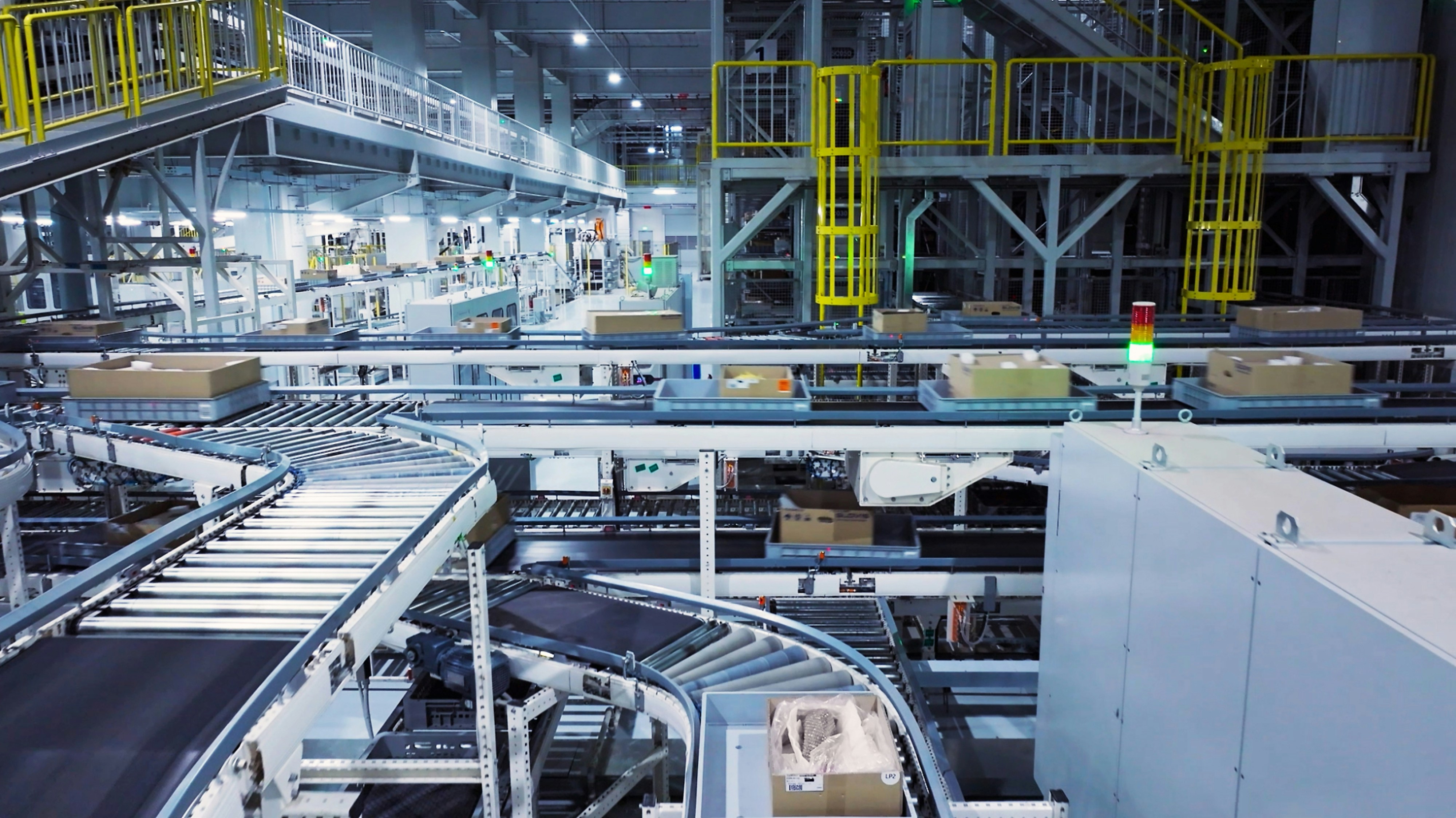
My work has taken me into a lot of industrial sites over the years, logistics warehouses, assembly halls, production plants. The sentence keeps bothering me, because those halls are already full of robots. Gantries, arms, conveyors, autonomous carts. Not one of them looks like a person, and nobody rebuilt the building to make room for them. The factory was built around the machines. If the brownfield argument were as strong as the pitch says, these plants would look very different.
Why would you line up ten humanoids along a conveyor belt when none of them needs to look at the others? A machine does not care what its counterpart looks like. We do. We have spent millions of years reading the bodies and expressions of other apes, and we are extremely good at it. So maybe the shape was never chosen for the work. Maybe it was chosen for the situations where a person is standing right next to the machine, which would make the humanoid something closer to a new kind of computer interface. Instead of typing we speak, and instead of moving pixels the machine moves objects in the real world. If that is what we are building, the factory is a strange place to prove it.
So I wanted to talk to someone who was there before the money arrived, and who has thought hard about how people and robots deal with each other. Adam started in humanoid robotics when there was no business case at all. He worked on ASIMO at Honda Research, then on humanoids in the Personal Robots Group at the MIT Media Lab, where the question was never whether the robot could do the job, but how a person would get along with it. Today, Adam works across robotics, hardware development, and human-machine systems, drawing on more than two decades of experience, including as a Principal Scientist at Flex, one of the world’s largest contract manufacturers, where he saw the factory side of the story firsthand. I wanted to know from him what Honda was chasing when there was no money in it, how much the brownfield argument is really worth once you stand inside a plant, and how much of this boom is about the human shape itself rather than about work.
Marc: Honda spent two decades on ASIMO without a business case. What was everyone chasing back then, and how is today's boom different?
Adam: Back then Honda Research operated fairly independently from Honda Motor Company and had separate goals. It pursued fundamental research over the productization the commercial side cared about. ASIMO grew out of a broader locomotion program and the specific challenge of walking on two legs, which was very hard at the time and is mostly solved today. It then became a platform for studying human-robot interaction, but the technical hurdles kept it from any serious product planning.
Boston Dynamics started in a similar place, in the foundational research of the MIT Leg Lab, but went for products early. They launched gait analysis software for soldiers carrying heavy packs, then BigDog as a robotic pack mule, then Spot, and now Atlas. Whether the products get adopted is still an open question.
My own work on humanoids at MIT was never about automating labor or about economics. It was about how people and robots interact, the social side, communication, and how much cognitive load a person carries during that interaction. It is simply easier for a person to interact with a machine the way they interact with another human. Saying "grab me that apple" while pointing at it is natural and effortless. The equivalent instruction to a robot might require the apple's position in x, y and z, plus the grasp, the orientation and the trajectory. Nobody wants to type that.
That work needed computer vision, facial expression, language processing, gesture recognition, and a lot of psychology of human-to-human communication. We were probably learning more about ourselves than about the machines. But the goal was always humans and robots working together.
Today's boom is built on that early research. Once some of the technical obstacles fell, the focus shifted to commercialization. Large multimodal models have broken the language and intelligence barrier, and the last frontier now seems to be action in the physical world. Embodied AI is the logical next step. But we may have mistaken human morphology for the necessary hardware of physical intelligence.
Marc: I have been in many industrial plants and they are already highly automated. None of those machines look anything like a person. How much is the brownfield argument really worth?
Adam: It has some validity, but it rests on a couple of assumptions and it is not the whole reason. The claim is that trillions of dollars of human-centric infrastructure are too expensive or too complex to change for machines that do not look like us. That might hold at the scale of a city. It does not hold at the scale of a building. Factories are built around non-humanoid machines and automation all the time.
The second assumption is that humanoid robots will perform as well as or better than our biological bodies. That is a big one. There has been a lot of progress in gross motor skills and balance. Fine motor skills and dexterity in the hands are still a serious challenge.
A variant of the argument is the general-purpose machine. One body that can mop a floor, stock shelves and change light bulbs, with different models and skills running on the same hardware, replacing several specialized positions. One machine, many jobs. But the human form is not the only one capable of that, and it is not the most efficient. So there is more beneath the surface.
Some of these reasons explain why capital flows into humanoids right now. Some of it may also be FOMO, investors looking for options outside of traditional AI. But that is not what drives our fixation on the human shape.
Marc: Industrial robots already work without breaks, without holidays and without a union. So what is left that only the human shape delivers?
Adam: Humans constantly try to prove that we are unique, different from animals and from machines. We are fixated on our own intellect and on our own morphology, and technology keeps eroding that exceptionalism. There is a deeper psychology here, and part of it may sit in our neurobiology.
Our mirror neuron system builds an internal representation of movement we observe. It fires when you perform an action and when you watch someone else perform a similar one, and that extends to watching a robot. The brain does not just process the visual information. It partially recruits the motor systems you would use to make that movement yourself. It is a bit like your brain running its own movement model. If the observed movement checks out, cognition is smoothed and you get acceptance. If it does not, cognitive load goes up and you get tension. That tension is one candidate explanation for the uncanny valley.
In the end, adoption will decide which form factors survive. Robots working alongside humans are maybe not that necessary in manufacturing. In our social environments they are.
Marc: We have been making people out of clay and wood in our stories for centuries, from the Golem to Pinocchio. A machine in our own shape forces us to define ourselves. How much of this boom is psychology?
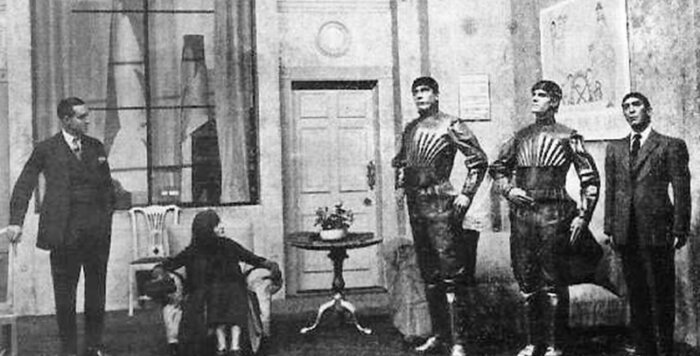
Adam: You are right that we have always tried to make or remake ourselves in humanlike form. It runs through history. The term “robot” was introduced to the world in the 1920s by Karel Čapek in his theatrical works; it was born out of the labor struggles and automation of his era. That pairing of humanoid robot and labor is the lens we still look through today.
Labor is bound to our sense of self, and we have been living through that identity crisis since the industrial revolution. Hegel explores the relationship of dependence between the master and the slave. The master becomes dependent on the slave’s labor, but with Winner, the master-slave paradox is about humanity becoming dependent on the labor of technological systems. There is a longstanding belief that labor is not just a means to make a living, but that the broader idea of labor is that of productive activity through which we express, develop and understand ourselves, it constructs our identity. Now the paradox crosses a new threshold with humanoid robots combined with large models. We are finally confronting the paradox. An identity crisis in which we might not be as unique as we think.
When I think back to our early work in human-robot interaction, we were focused on humans communicating and working alongside robots, robots learning from us and with us. Today the focus is on robots learning independently, for themselves, which makes alignment the central concern. That is a significant philosophical shift.
The economic argument is not wrong. It is just smaller than the pitch makes it. It holds for the world outside the building, for stairs, doors and pavements, for a city nobody wants to rebuild. Inside the building it barely holds at all. Factories get rebuilt around machines every year.
The human shape did not come out of the factory. It came out of the interaction lab. Which makes the factory an odd place to prove it. On a production floor most of the interaction already happens between machines, and a machine does not care what its counterpart looks like. We do. We read a body that moves like ours before we have decided anything, and we do it with our own motor system. Millions of years of reading the bodies of other apes are doing the work. Strictly speaking, the humanoid is a robot shaped like an ape, because that is what we are. An AGV with a cobot on top will never get that reaction, however well it performs. So the humanoid is not only an industrial tool but an interface that evolution has programmed us for.
If the form was chosen for the person standing next to the machine, then the value sits there too. A machine we can instruct like a colleague, that we read like a colleague, that lowers the load on the person working beside it. That is easier to picture in a hospital corridor or a hotel lobby than between two conveyor lines. It also raises the bar. For that value to exist, the fence has to come down. Most industrial robots work behind cages and light curtains, and a humanoid whose whole point is contact with people cannot. It has to be safe enough to stand next to us, and in a hospital corridor that is a harder problem than lifting a crate.
Which leaves the question the pitch decks skip. What is the humanoid, really? A worker that never gets tired, or an interface we trust because it looks like us? And if it is the second, what are we actually building it for?
About Adam Whiton, PhD: A technologist and roboticist with more than twenty years of experience researching intelligent machines, human-robot interaction, and emerging technologies at the frontier of robotics and human-machine collaboration. His work has spanned fundamental research and applied development, from ASIMO at the Honda Research Institute to humanoid and social robotics in the Personal Robots Group at the MIT Media Lab. He later served as a Principal Scientist at Flex, leading multidisciplinary programs connecting research, hardware development, and manufacturing.
About Marc Eyrich: Communications consultant for deep tech and robotics companies, based in the Stuttgart region. Has a background in filmmaking and directing TV commercials. For over ten years he does brand communication for tech companies, most recently in-house in robotics. Today he helps deep tech companies turn their technical lead into a market lead at Lucent.